Prior Authorization as a Silent Profit Erosion Engine
Prior authorization is no longer a background administrative task. It has evolved into a high-friction, high-cost operational function that quietly erodes profitability, clinical efficiency, and staff morale. For small practices, the danger lies not in the existence of prior authorization itself, but in tolerating its expanding footprint without recalibrating strategy.
The decision of outsourcing prior authorizations is not dictated by ideology or preference. It is dictated by volume, cost, and risk tolerance. When these variables cross defined thresholds, in-house management ceases to be prudent and becomes economically indefensible.
Understanding the Modern Prior Authorization Burden
Payers increasingly rely on prior authorization to control utilization, particularly for imaging, specialty medications, therapy services, and behavioral health. While the intent is cost containment, the operational burden is shifted downstream to providers—especially small practices without scale advantages.
The average physician practice processes between 39 and 45 prior authorizations per week, a figure that climbs rapidly in specialty care and high-volume settings. At higher utilization levels, prior authorization transforms from a clerical function into a dominant operational constraint When Should a Small Practice Co….
The Volume Threshold That Changes the Equation
The most reliable outsourcing trigger is weekly authorization volume. Research indicates that once a practice reaches 75 or more prior authorization requests per week, outsourcing becomes economically rational and operationally stabilizing.
At this level, practices are typically consuming 12 or more staff hours per week on authorization-related activities. In reality, the true time burden is often far higher, fragmented across clinical staff, front-office personnel, and physicians themselves. Volume, not headcount, is the decisive variable.
The True Cost of In-House Prior Authorization
Manual prior authorization processing costs approximately $10.97 per transaction, driven by labor, follow-ups, documentation errors, and resubmissions. At 75 requests per week, this equates to roughly $570 per week—or more than $29,000 annually in direct processing costs alone.
When overhead, software, training, and opportunity cost are factored in, the average practice loses more than $70,000 per year managing prior authorizations internally. A single dedicated staff member performing authorization work can cost up to $120,000 annually in salary and overhead. These figures expose a structural inefficiency that compounds over time.
Physician Time: The Most Expensive Misallocation
When physicians become involved in prior authorization, the economics deteriorate rapidly. Primary care physicians who manage their own authorization tasks incur an estimated $2,161–$3,430 per physician annually in lost productivity.
More damaging than the financial loss is the cognitive tax. Administrative distraction undermines clinical focus, accelerates burnout, and reduces patient throughput. This is not a sustainable trade-off.
Denials, Delays, and the Illusion of Control
High denial rates are often misattributed to payer hostility rather than submission errors. Medicare Advantage plans denied 7.4% of prior authorization requests in 2022, yet 81.7% of appealed denials were overturned, signaling preventable deficiencies in initial submissions.
At HealthCell, we specialize in correcting this disconnect. By maintaining payer-specific authorization playbooks and standardized clinical documentation protocols, our prior authorization teams routinely improve first-pass approval rates while reducing downstream appeals. This approach reframes prior authorization from a reactive exercise into a predictable, controlled workflow.
Specialized outsourcing vendors consistently achieve higher first-pass approval rates by aligning documentation precisely with payer-specific criteria. Automation further compresses turnaround times—from 10.8 days for manual submissions to 4.1 days electronically, with peer-to-peer resolution occurring up to 11 days faster.
Manual Processing as a Structural Liability
Despite technological advances, 37% of prior authorization transactions remain manual, relying on phone calls, fax machines, and email. Manual transactions cost nearly double their electronic counterparts—$10.97 versus $5.79 per request.
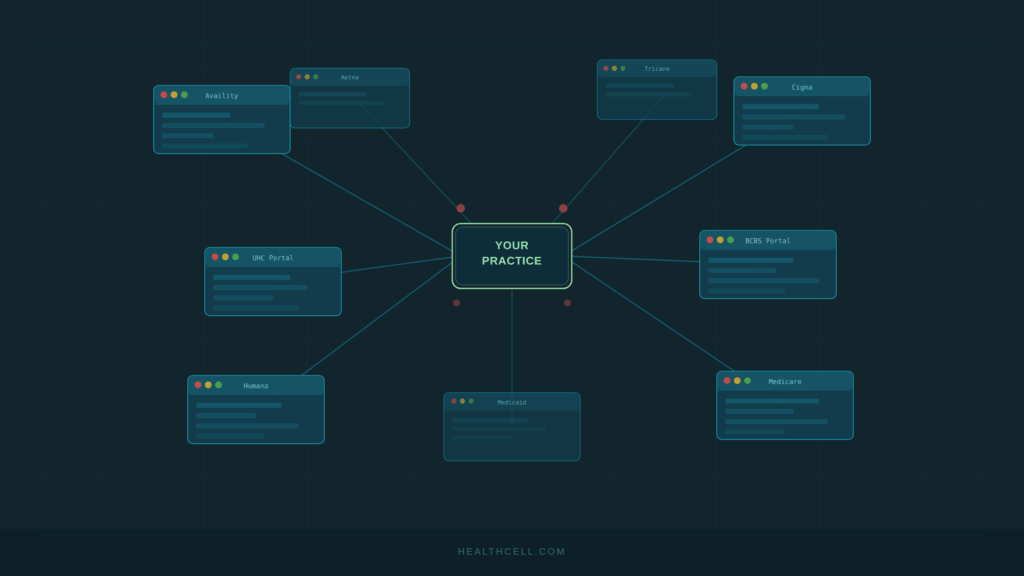
HealthCell’s prior authorization services are structured around electronic-first submission models, leveraging payer portals and emerging API-based workflows rather than phone- and fax-dependent processes. For small practices still entrenched in manual workflows, this transition alone often delivers immediate reductions in turnaround time, staff burden, and resubmission rates.
Practices still operating in a manual environment are incurring avoidable costs while increasing error rates. Outsourcing vendors, by contrast, leverage electronic portals and emerging FHIR-based APIs as standard infrastructure, not optional upgrades.
The 2026 Regulatory Inflection Point
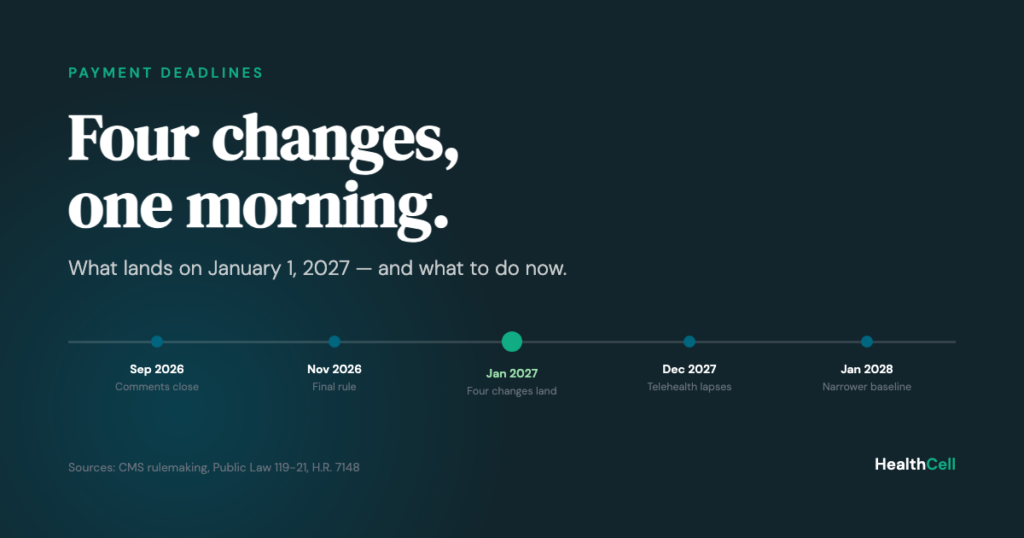
Beginning January 1, 2026, CMS will mandate FHIR-based electronic prior authorization APIs, with strict turnaround requirements: 72 hours for urgent requests and 7 days for standard requests. Practices must also align documentation with 487 new ICD-10-CM diagnostic codes supporting medical necessity determinations.
For small practices without dedicated IT or compliance resources, this regulatory shift represents a material operational risk. Outsourcing prior authorization becomes a risk-mitigation strategy—shielding practices from compliance failures that could disrupt scheduling and cash flow.
Specialties Where Outsourcing Delivers Disproportionate ROI
Outsourcing yields the strongest returns in high-complexity, high-frequency authorization environments:
- Physical and Occupational Therapy, where services exceeding $2,410 or 20 visits trigger authorization requirements
- Behavioral Health, which carries the highest authorization burden and session-based approval constraints
- Specialty Medications, including biologics and injectables requiring frequent reauthorizations
In these settings, authorization complexity amplifies cost inefficiencies, accelerating the case for outsourcing.
When In-House Management Still Makes Sense
In-house prior authorization remains viable primarily for practices with 10 or more providers that can justify dedicated, specialized authorization staff. These organizations can absorb training costs, track payer rule changes, and manage appeals at scale.
Smaller practices attempting to replicate this model typically rely on part-time coordinators, physician intervention, or fragmented workflows—each introducing inefficiency and hidden cost.
The Financial Reality of Outsourcing
Outsourcing vendors typically charge $2–3 for simple authorizations and $3–5 for complex cases. At 75 weekly requests, this translates to $7,800–$19,500 annually, compared to $70,000 or more in internal costs.
Practices routinely achieve 30–50% labor cost reduction, with reported three-year ROI ranging from 150–250%. Breakeven typically occurs within six to nine months, with full ROI realized in the first year as workflows stabilize and denial rates decline.
HealthCell operationalizes these savings by scaling authorization support in direct proportion to volume, eliminating the fixed-cost inefficiencies of in-house staffing. For small and mid-sized practices, this model enables predictable authorization costs, faster breakeven timelines, and measurable improvements in cash-flow stability without increasing internal headcount.
Outsourcing as an Operational Maturity Decision
Outsourcing prior authorization is not an admission of operational weakness. It is an acknowledgment of economic reality. When authorization volume rises, denial risk increases, manual processing persists, or regulatory complexity accelerates, internal management becomes a strategic liability.
For small practices, the decisive question is not whether prior authorization can be handled internally—but whether it should be. At defined thresholds, outsourcing transforms prior authorization from a chronic drain into a controlled, predictable, and financially rational function.